Natural Stone Surfaces for Desert Landscapes
Flagstone Installation in Las Cruces for patios and pathways that follow organic shapes and complement native plantings
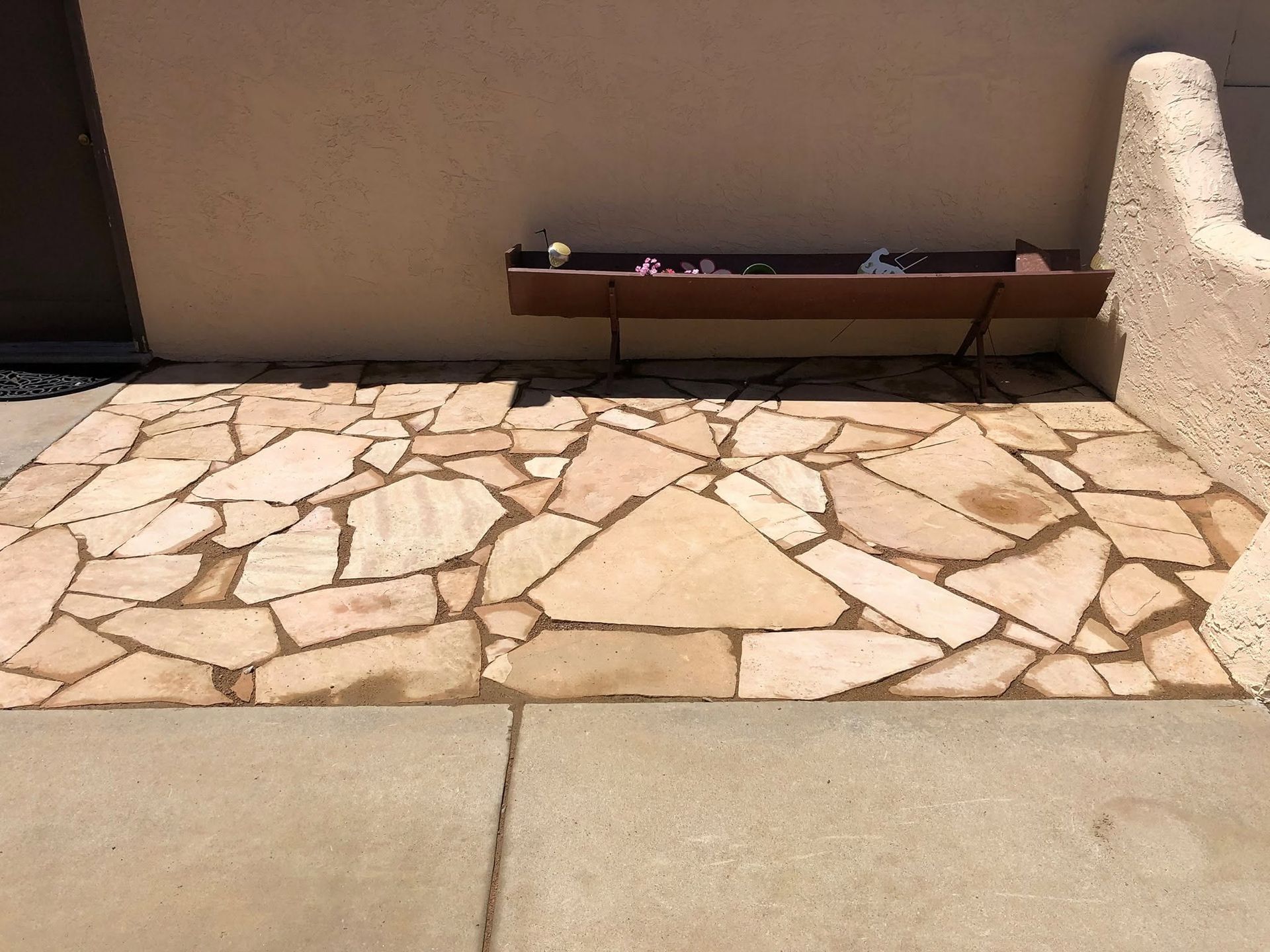
Flagstone patios and walkways fit the irregular contours common in desert landscaping, where rigid geometric patterns often clash with the natural forms of rock outcroppings, arroyos, and native vegetation. Each stone's unique shape and color variation create surfaces that feel intentional rather than manufactured, blending with the surrounding environment instead of imposing a uniform grid. The varied thickness and texture of flagstone pieces require careful selection and placement to produce walking surfaces that remain stable and comfortable underfoot while maintaining the organic appearance that draws many property owners to this material.
Hawk-Eye Landscaping sets flagstone on a compacted gravel base that supports the weight of foot traffic without shifting, with each piece positioned to minimize gaps and create a cohesive surface. Joints between stones can be filled with decomposed granite or left open for low-growing ground covers, depending on how the hardscape connects to adjacent planting beds or gravel areas. The installation process involves fitting irregular shapes together like a puzzle, rotating and testing each piece to find stable positions that distribute weight evenly across the stone rather than concentrating pressure on thin edges that might crack under use.
Arrange an on-site consultation to review stone selection, layout patterns, and how flagstone areas will transition into your existing landscape features.
How Flagstone Defines Functional Outdoor Spaces
Flagstone installation begins with evaluating the intended use of each area, since gathering spaces require larger, flatter stones with minimal gaps, while garden pathways can incorporate smaller pieces with wider joints that accommodate plantings. The base preparation involves excavating to a consistent depth and compacting crushed aggregate that drains rapidly during summer storms, preventing the pooling that can undermine stones and create uneven surfaces. Stone thickness varies within each pallet, so pieces are sorted and positioned to create a finished surface that remains level without requiring excessive base adjustments.
After installation, you'll walk across surfaces that feel stable without the rocking or tipping that occurs when stones rest on inadequate foundations or when irregular bottoms aren't properly seated. The natural color variations in flagstone shift throughout the day as sun angles change, creating visual interest that solid-colored pavers cannot replicate. Open joints allow water to infiltrate the ground rather than running across the surface, which reduces erosion around planting beds and prevents the silt buildup that clogs drainage paths during monsoon season.
Flagstone weathers gradually under UV exposure and occasional freezes, developing a patina that integrates further with desert surroundings rather than looking increasingly worn. The material absorbs less heat than concrete or asphalt, making barefoot use more comfortable during summer months. Because each stone is individually placed, future adjustments or expansions can match the existing installation without visible seams or color mismatches that mar poured surfaces when additions are made years later.
Answers About Flagstone Projects
Customers considering flagstone for Las Cruces properties often have questions about how this natural material performs in desert conditions and integrates with existing landscapes.
What makes flagstone suitable for desert climates?
Natural stone tolerates extreme temperature swings without cracking, and its thermal mass moderates surface temperatures compared to concrete, remaining cooler underfoot during peak afternoon heat.
How are stones positioned to create stable walking surfaces?
Each piece is placed on a leveled gravel base and tested for rocking before joints are filled, with thicker stones used in high-traffic areas and thinner pieces reserved for decorative borders or low-use pathways.
What options exist for filling gaps between flagstone pieces?
Joints can be packed with decomposed granite that locks stones in place, filled with drought-tolerant ground covers that soften the appearance, or left as open gravel channels that emphasize the natural shapes of individual stones.
When should flagstone be chosen over pavers or concrete?
Properties with curved pathways, irregular gathering areas, or landscapes emphasizing native plants benefit from flagstone's organic appearance, while spaces requiring uniform surfaces or vehicle access often work better with pavers or poured concrete.
How does flagstone integrate with gravel beds and planting areas common in Las Cruces landscapes?
Stones can be set flush with surrounding grade or raised slightly to create defined edges, with open joints allowing transitions between hardscape and softscape that appear continuous rather than abruptly bordered.
Hawk-Eye Landscaping sources flagstone in varied sizes and colors, selecting pieces that suit your specific project scale and aesthetic goals. Discuss a custom flagstone project to explore layout possibilities and material options for your property.