
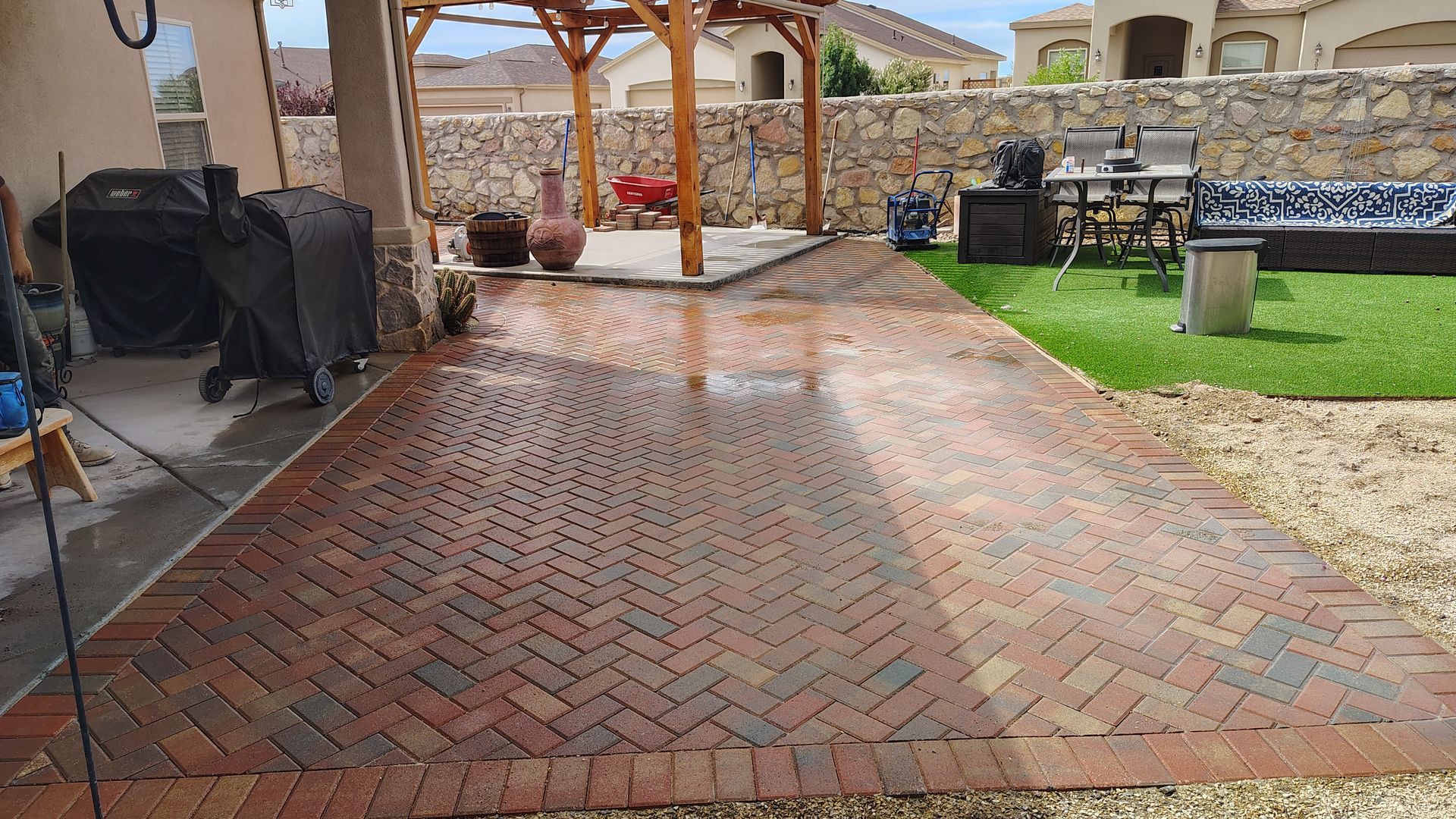
Patios and Gathering Areas Designed for Use
Outdoor Living Spaces in Las Cruces for properties that need functional zones for entertaining, relaxing, and everyday outdoor activities
A patio that sits disconnected from the rest of the yard, a fire pit surrounded by uneven gravel, or seating areas without shade or lighting often go unused despite the investment. Hawk-Eye Landscaping plans outdoor living spaces in Las Cruces by coordinating pavers, flagstone, concrete, turf, planting, and gravel around the intended activity—whether that's dining, conversation, cooking, or kids' play. The layout considers how people move between the house and outdoor zones, where shade falls during different times of day, and how elements like lighting and low-voltage wiring integrate without creating trip hazards or visual clutter.
Installation begins with grading that ensures water drains away from gathering areas, followed by base preparation for pavers or flagstone that prevents settling and keeps surfaces level. Edges are defined with borders that separate hardscape from planting beds or gravel transitions, and any irrigation or lighting conduit is placed before surface materials go down.
Schedule a consultation to review how outdoor living areas can be planned around your property's layout and intended use.
Why Cohesive Planning Matters for Usable Spaces
Spacing between paver joints, the way flagstone pieces fit together, and the transition from hardscape to turf or gravel all affect whether the space feels intentional or improvised. Lighting placement is planned alongside seating zones and pathways so that fixtures illuminate where people walk and gather without creating glare. Planting beds near patios are positioned to provide screening or softening without dropping excessive debris onto seating surfaces.
After installation, you'll notice level surfaces that don't puddle after monsoon rains, clear pathways connecting entry points to gathering zones, and outdoor areas that feel like extensions of indoor living space rather than isolated yard features. Southern New Mexico's climate allows for outdoor use most of the year, and the space functions better when shade structures, surface materials, and circulation routes are planned together from the start.
The service includes decisions about material type—pavers offer uniform sizing and color consistency, flagstone provides irregular natural character, and poured concrete allows for larger uninterrupted surfaces. Each option affects installation method, long-term maintenance, and how the space integrates visually with surrounding landscape elements. Turf or gravel zones adjacent to hardscape extend usable area and reduce dust while keeping the overall design cohesive.
Common Questions About Outdoor Living Projects
Clients often ask how different materials perform in desert conditions and how outdoor spaces connect with the rest of their landscape plan.
What's the difference between pavers and flagstone for patios?
Pavers offer uniform thickness and interlock for stability, making them easier to level and replace individually, while flagstone provides natural color variation and irregular shapes that require more precise fitting during installation.
How is drainage managed in outdoor living areas?
Base layers are graded to direct water away from structures, and joint spacing in pavers or flagstone allows surface water to percolate rather than sheet across the hardscape into adjacent areas.
Can lighting be added to an outdoor living space?
Low-voltage lighting is integrated during installation by running conduit beneath hardscape edges and positioning fixtures near pathways, seating zones, and landscape features that benefit from nighttime visibility.
How do planting beds work near patios in Las Cruces?
Plants are selected for low litter and placed where irrigation overspray won't reach seating surfaces, with gravel or mulch transitions separating planted zones from hardscape to reduce maintenance.
What makes an outdoor space feel connected to the rest of the property?
Pathways that lead naturally from entryways to gathering areas, material choices that echo other landscape elements, and sightlines that tie the patio visually to planting beds or turf zones all contribute to cohesion.
Hawk-Eye Landscaping designs outdoor living spaces that reflect how you use your property and coordinate with existing or planned landscape features. Reach out to discuss patio layouts, material options, and how gathering areas fit into your overall outdoor plan.