Intentional Water Delivery for Desert Landscapes
Irrigation System Installation in Las Cruces for properties where dry conditions and intense sun exposure require efficient, targeted watering
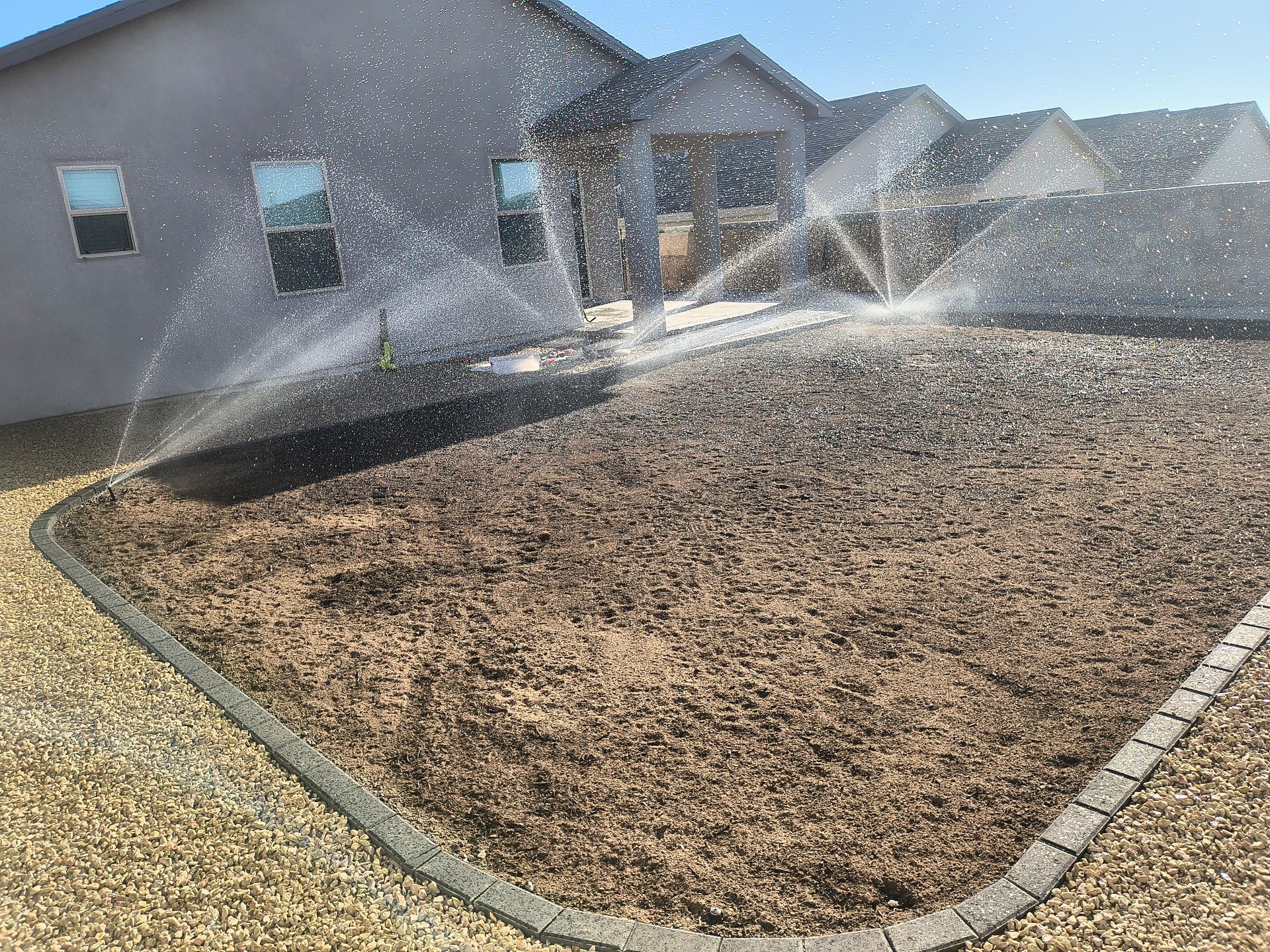
Hot, dry conditions throughout Las Cruces make manual watering labor-intensive and inconsistent, particularly for properties with multiple planting zones, new sod, or landscape beds requiring different moisture levels. Irrigation system installation provides automated water delivery that accounts for plant types, sun exposure, and soil conditions across your property. Hawk-Eye Landscaping designs systems that place emitters, sprays, or drip lines where they support plant health without saturating hardscape areas or creating runoff that wastes water and erodes planting beds.
System design begins by mapping watering zones based on whether areas contain turf, shrubs, native plantings, or ornamental beds, since each category has distinct water requirements. Drip irrigation delivers moisture directly to root zones in planting beds, reducing evaporation and preventing overspray onto walls, pavers, or windows. Spray heads are positioned for turf areas or ground covers requiring broader coverage, with head placement calculated to avoid watering pavement or missing corners where inadequate overlap leaves dry patches. Controllers allow scheduling adjustments as seasonal temperatures change and plants mature, reducing the guesswork involved in manual watering routines.
Schedule an irrigation consultation to review your property's planting zones, water sources, and how coverage areas will integrate with new or existing landscape features.
Why Efficient Placement Works for Desert Properties
Irrigation installation involves running supply lines from the water source to each zone, installing valves that control flow to individual circuits, and placing emitters or heads according to plant spacing and sun exposure. In Las Cruces landscapes where afternoon heat and low humidity accelerate evaporation, early morning watering times programmed into controllers ensure moisture reaches roots before midday temperatures peak. Backflow prevention devices are installed to meet local codes and protect the main water supply from contamination.
You'll notice plants receiving consistent moisture without the wilting that occurs between infrequent manual waterings or the overwatering common when hoses are left running too long. Turf areas green up uniformly rather than showing brown patches where coverage gaps exist, and planting beds maintain appropriate soil moisture without the standing water that promotes root rot or fungal issues. Systems can be expanded as landscapes mature or new planting areas are added, with additional zones tied into existing controllers and supply lines without requiring complete reinstallation.
Automated irrigation simplifies landscape maintenance by eliminating daily watering tasks, though seasonal adjustments remain necessary as temperatures shift and plants enter dormant periods. Properly zoned systems apply water where it's needed without saturating paths, patios, or areas where runoff would carry soil and mulch into drainage channels. Rain sensors can pause scheduled watering during storms, preventing unnecessary cycles when natural precipitation has already moistened the soil.
Questions About Irrigation Systems
Customers planning landscape projects in Las Cruces often ask how irrigation installation supports plant health and reduces manual watering effort in desert conditions.
What determines how watering zones are divided across a property?
Zones group plants with similar water needs together, separating turf from shrubs, native plantings from ornamental beds, and sun-exposed areas from shaded sections that require less frequent watering.
How does drip irrigation differ from spray heads in desert climates?
Drip lines deliver water slowly at soil level, minimizing evaporation and directing moisture to root zones, while spray heads cover broader areas like turf but lose more water to wind and evaporation during hot, dry periods.
What happens if a system needs adjustments after installation?
Controllers can be reprogrammed to change watering duration or frequency, and individual heads or emitters can be added, relocated, or replaced as plants grow or landscape layouts change over time.
When should irrigation be installed relative to other landscape work?
Systems are typically installed after hardscaping is complete but before sod or final plantings, allowing lines to be positioned without disrupting finished surfaces or damaging new plants.
How does an irrigation system integrate with monsoon rains common in Las Cruces summers?
Rain sensors detect precipitation and interrupt scheduled cycles, preventing the system from watering when natural rainfall has already provided adequate moisture to planting beds and turf areas.
Hawk-Eye Landscaping plans irrigation systems around your property's specific plant selections, microclimates, and water access points. Request an irrigation consultation to discuss coverage needs and system options that support your landscape goals.