Surfaces Built to Handle Desert Heat and Daily Use
Paver Patios, Walkways, and Driveways in Las Cruces for outdoor spaces that remain stable under year-round sun exposure
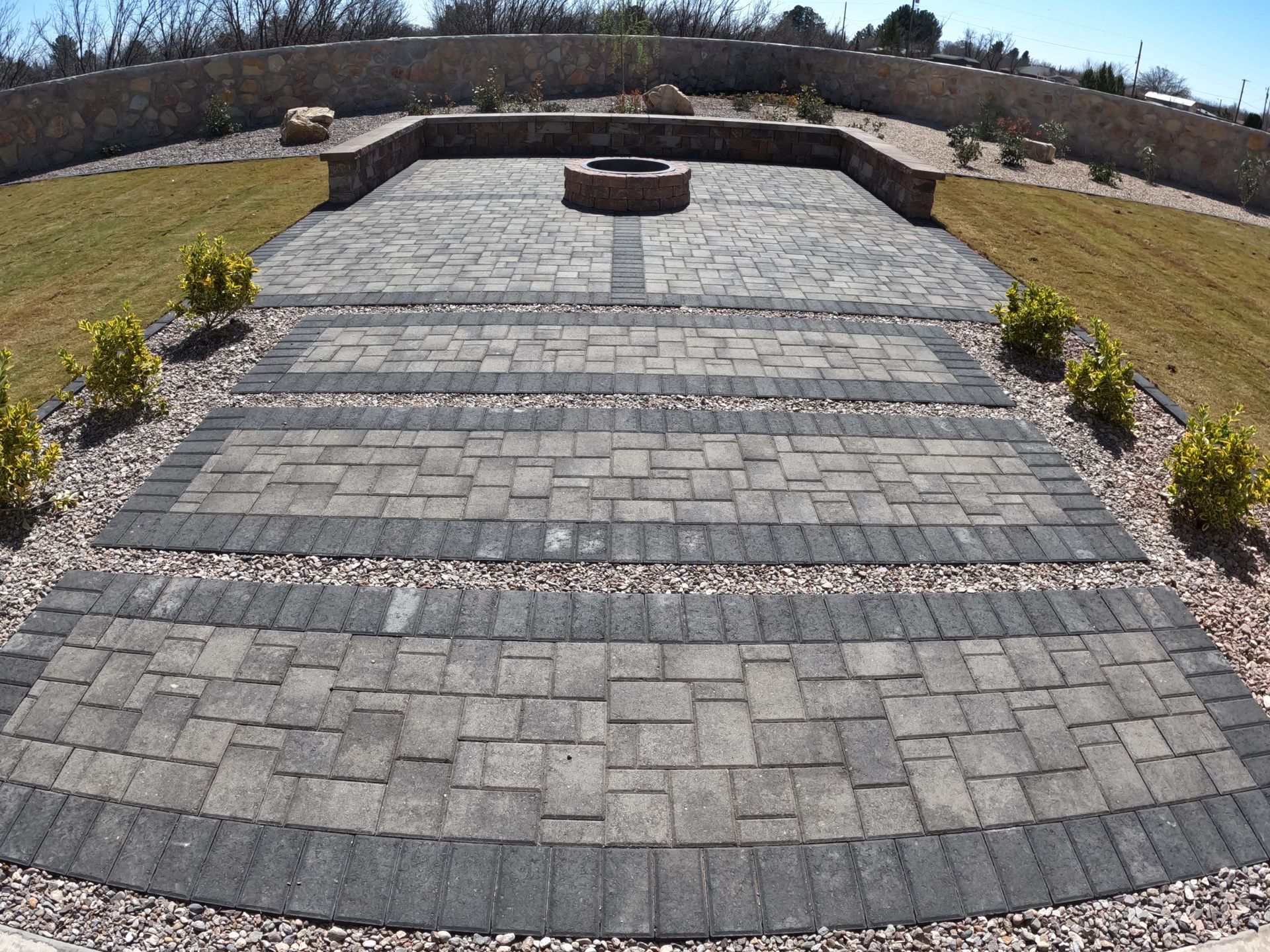
Hawk-Eye Landscaping installs pavers for patios, walkways, and driveways that handle the thermal expansion and contraction caused by intense daytime heat and cool desert evenings. Each installation begins with a compacted base that prevents settling under foot traffic and vehicle weight, keeping individual pavers level and aligned over time. The interlocking design distributes weight across multiple units rather than forcing a single slab to carry the load, reducing the cracking common in solid concrete surfaces exposed to rapid temperature swings.
The installation process involves excavating to the proper depth, layering crushed aggregate that drains quickly during monsoon rains, and setting pavers in patterns that guide water away from building foundations. Edge restraints hold the perimeter in place, and polymeric sand fills the joints to prevent shifting while allowing the surface to flex slightly as ground temperatures change. Because Las Cruces properties often combine hardscape with gravel beds and native plantings, paver borders can follow irregular shapes that transition naturally into desert landscaping without requiring straight lines or rigid geometry.
Schedule a property evaluation to review layout options, drainage paths, and integration with your existing outdoor features.
What Happens After Pavers Are Installed
Properly installed pavers form a surface that remains accessible immediately after completion, unlike poured concrete that requires days of curing before use. The joints between units allow water to percolate into the soil below rather than pooling on the surface or running toward structures, which matters during summer storms when brief, heavy rainfall can overwhelm solid surfaces. The compacted base prevents the dips and low spots that develop when unprepared ground settles unevenly under repeated use.
You'll notice walking surfaces that remain level without the tilt or wobble that develops when individual stones or slabs settle at different rates. Driveways carry vehicle weight without the rutting or edge breakage common in softer materials, and patio areas define gathering spaces with clear borders that separate them from planting beds or gravel. Hawk-Eye Landscaping accounts for slope requirements during layout, ensuring runoff moves away from buildings and toward appropriate drainage points without creating standing water or erosion channels.
Pavers can be lifted and reset if future utility work requires access beneath the surface, unlike monolithic slabs that must be cut and patched. The modular design also allows expansion of patios or walkways without visible seams between old and new sections, since additional units interlock with the existing field. Individual damaged pavers can be replaced without disturbing surrounding areas, maintaining a uniform appearance even after years of use under full sun and occasional freeze events.
What to Know Before Your Paver Project
Property owners in Las Cruces often ask about paver installation before committing to a hardscape project. The following answers address common considerations specific to desert climates and outdoor living patterns.
What preparation happens before pavers are laid?
The site is excavated to remove unstable soil, and a graded aggregate base is compacted in layers to create a stable foundation that drains water and resists settling under load.
How do pavers handle the temperature extremes common in Las Cruces?
Individual units expand and contract independently, with sand-filled joints allowing slight movement that prevents the cracking seen in solid concrete slabs subjected to rapid heating and cooling cycles.
What drainage considerations affect paver layout?
The base is sloped away from structures at a minimum grade, and permeable joints allow water to infiltrate rather than run across the surface, reducing erosion and preventing water from pooling near foundations during monsoon rains.
Why do some paver surfaces develop low spots over time?
Inadequate base compaction or insufficient edge restraint allows pavers to shift under traffic, creating uneven areas that proper installation methods prevent from the outset.
What defines the border between paver areas and surrounding landscape?
Edge restraints are installed along the perimeter and buried below the finished surface, holding pavers in place while allowing natural transitions to gravel beds, planting areas, or turf zones without visible plastic or metal edging.
Hawk-Eye Landscaping plans each paver project around your property's drainage patterns, access needs, and how the hardscape integrates with outdoor gathering areas. Request a paver project consultation to discuss layout options and material selections for your specific site.