
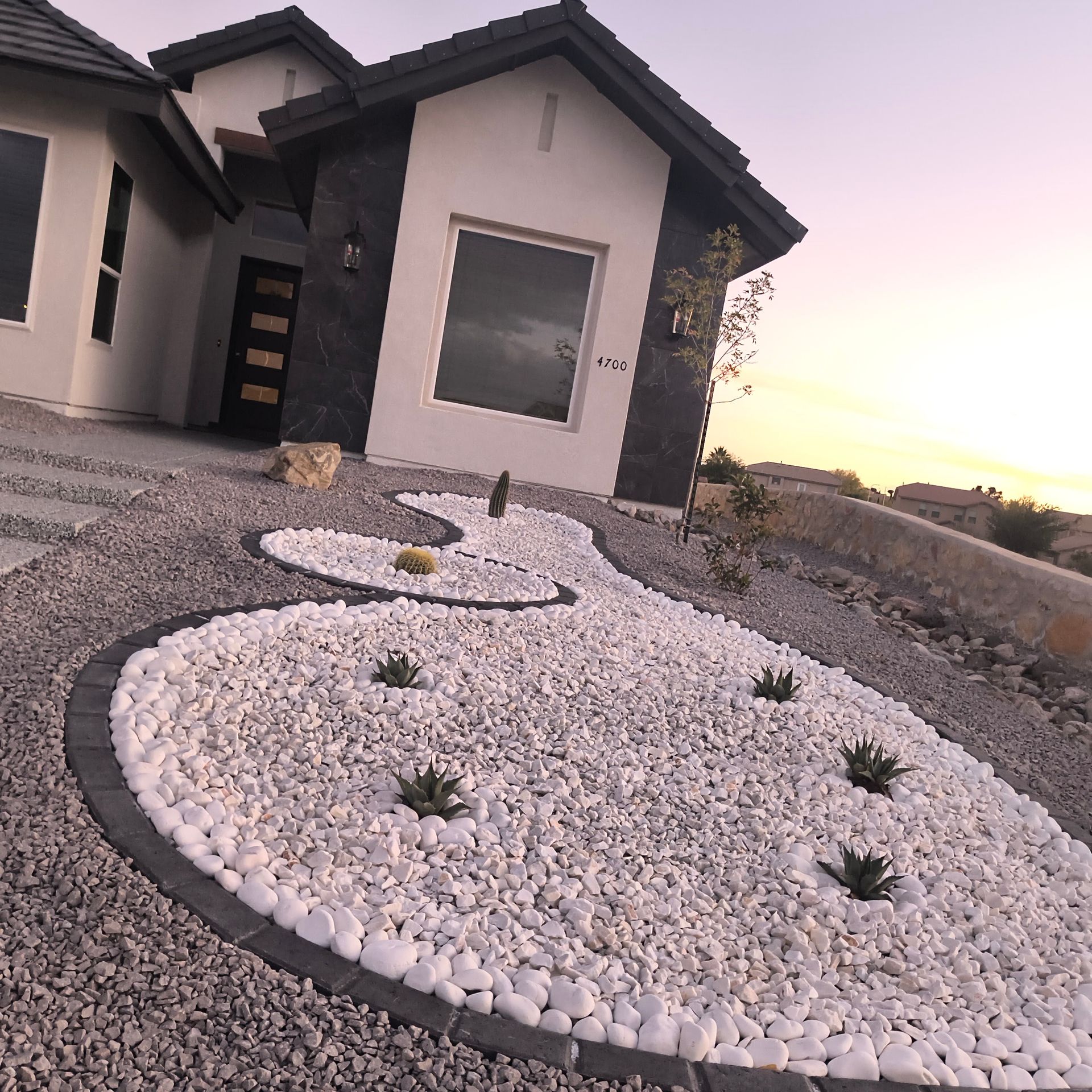
Surfaces That Hold Up in Desert Conditions
Gravel and Stone Landscaping in Las Cruces for properties that need defined outdoor zones without continuous irrigation
Hawk-Eye Landscaping installs gravel and decorative stone systems that function as both landscape structure and long-term surface cover across residential properties in Las Cruces. These materials define planting beds, outline pathways, transition between hardscape elements, and reduce the amount of irrigated area your property requires. When graded and edged correctly, stone features direct water where it's needed while keeping soil and mulch contained during monsoon rains.
The work involves excavating to proper depth, installing edge restraint that won't shift under foot traffic or weather exposure, laying landscape fabric where appropriate, and placing stone in compacted layers that prevent settling. Material selection affects how the feature performs—river rock moves differently under pressure than crushed granite, and larger stone holds edges better than pea gravel in high-traffic zones.
Schedule a property evaluation to identify where gravel and stone fit your layout and drainage patterns.
How Stone Placement Affects Long-Term Function
Proper installation starts with site grading that accounts for runoff direction and prevents pooling beneath the stone layer. Edge restraint is anchored before material placement to hold borders in position, especially where gravel meets turf, pavers, or planting beds. Depth matters—shallow stone coverage shifts and exposes fabric or soil underneath, while correctly compacted layers stay in place and suppress weed growth more effectively.
Once the system is complete, you'll see clean separation between planted areas and open ground, pathways that remain walkable after storms, and borders that hold their line without regular raking or repositioning. Stone features integrate with drip irrigation layouts, allowing emitters to sit beneath the surface while keeping planting zones visually distinct from decorative rock areas.
The approach works alongside existing hardscape and planting plans rather than as a standalone fix. Gravel transitions extend patios visually, create low-maintenance buffer zones around structures, and reduce the square footage that requires watering. Stone doesn't eliminate maintenance, but it shifts the work away from mowing, edging, and frequent watering.
What Homeowners Ask About Stone Features
Questions about gravel and decorative stone installations often focus on how the materials perform in southern New Mexico's climate and how they fit with other landscape elements already in place.
What keeps gravel from spreading into adjacent areas over time?
Metal or poly edge restraint is staked below grade to create a physical barrier that holds stone in place even when monsoon runoff moves across the surface, preventing migration into turf or planting beds.
How does stone work with existing irrigation?
Drip lines and emitters are positioned before stone placement so that water reaches plant roots without surfacing through the rock layer, keeping the system functional and visually clean.
What size stone works best for walkways?
Crushed granite or decomposed granite compacts into a stable walking surface, while larger river rock shifts underfoot and works better as decorative fill in low-traffic borders or around boulders.
Does landscape fabric go under all stone installations?
Fabric is used selectively—it helps in planting bed borders and around ornamental areas but may be skipped in decomposed granite pathways where compaction alone provides stability.
How often does stone need replenishment?
Well-installed systems in Las Cruces typically require minimal topping after the first year, with occasional additions in high-traffic zones or areas where wind and water gradually displace lighter materials.
Hawk-Eye Landscaping works with property layouts that combine stone, planting, and hardscape into cohesive outdoor zones. Request a consultation to review material options and placement strategies that match your landscape's function and appearance goals.